

Presentation
Central Roman people of the Hispanic Peninsula, whose main ethnic branches correspond to historical regions (Leonese, Castilians, Aragonese, Asturians, Cantabrians, Andalusians, Extremadurans).
The official flag of the Spanish State (1785) takes up the colors most represented on the coats of arms. The red-gold-red tradition dates back to the 12th century. The republican flags of the 19th century feature a lower purple stripe (often confused with “violet,” on a field divided into three equal bands), in reference to the banners of the 16th-century Comuneros. The original color of León’s lion was purple — the Roman senatorial and imperial color — and not gules (red). The Kingdom of Spain uses the bicolor with its characteristic proportions: a broad golden band between two horizontal red bands; but by origin, this flag above all characterizes the Spanish people as a distinct ‘historical nationality.’
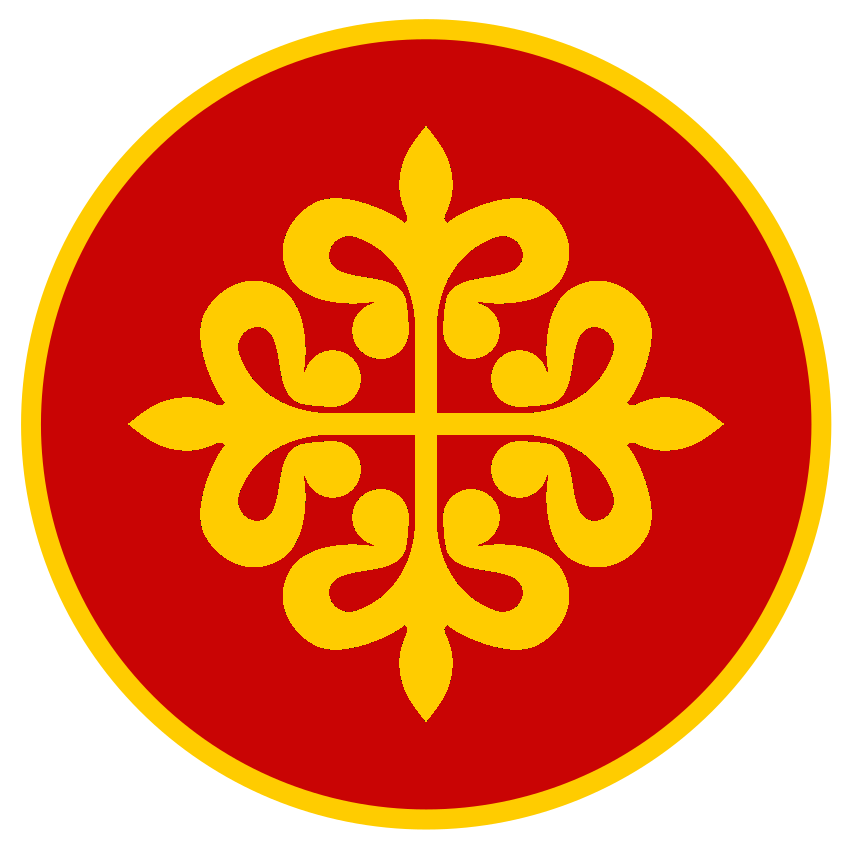
The kings of Spain bore as a crest the tower of Castile from which emerges a purple lion, rising, with a silver sword cross-hilted and pommelled in gold in the right paw, and in the left sometimes a red shield, sometimes a golden globe. These heraldic elements are difficult to stylize and not easily distinguishable from those of other communities. Here we depict instead a simple and well-known sign — the floriated cross of the type known as Alcántara or Calatrava — akin to motifs in folk art, a symbol common to the various Spanish-speaking regions.
Location
-
Spain







Add a comment