
Presentation
Gathered in the 8th century into the union known as Karantanija (the same root is found in the name Carniola, Anonymous of Ravenna, IV, 37), the Slovenes were incorporated into the Holy Roman Empire. The Karantanians developed a Western culture at the crossroads of Latin and Germanic influences.
Outside their national state, Slovenes number in the tens of thousands in Julian Venetia, in the provinces of Trieste, Gorizia, and Udine (Valcanale), near Istria. Austrian Carinthia has a Slovene minority, mainly in the districts of Klagenfurt, Villach, and Völkermarkt.
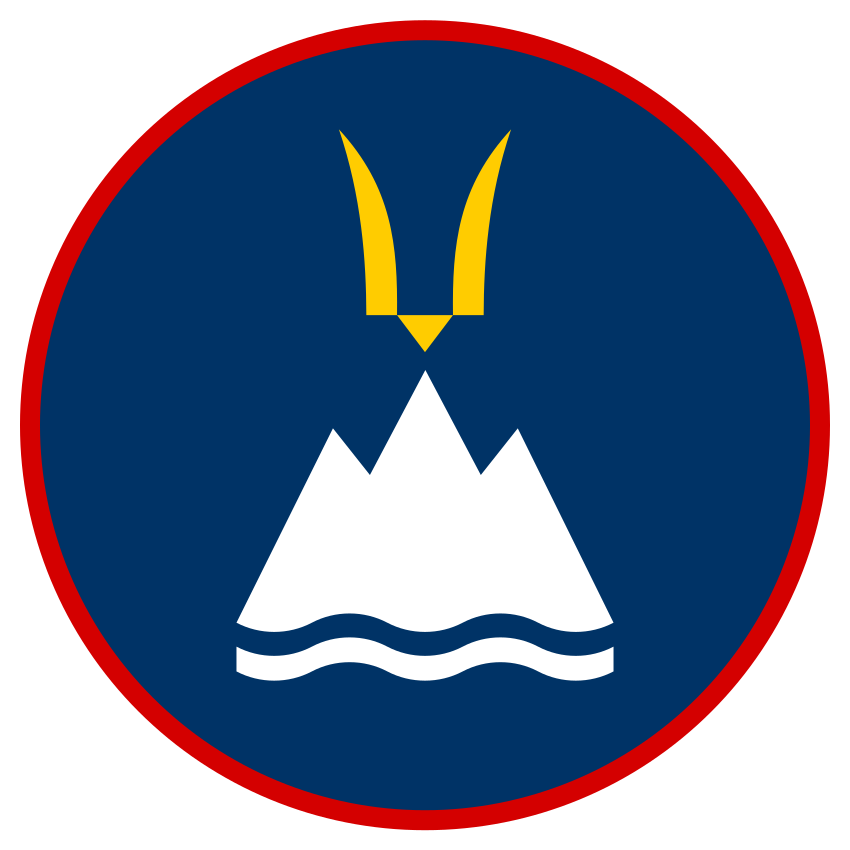
In 1867, a Slovene flag featured three horizontal bands of blue, white, and green. The current flag, which appeared around 1848, takes up the colors of the coat of arms and places the national shield on its three horizontal stripes. The shield depicts Mount Triglav, the highest peak of the Slovenian Alps, celebrated in the invocation moj dom (“my home”), accompanied by three heraldic stars and wavy lines representing the rivers and the sea.
Another symbol of Slovenia is the legendary chamois Zlatorog (“Golden-Horned”), a sign of abundance. The national flower is the red carnation.
We represent here the three peaks of Mount Triglav and the horns of Zlatorog.
Region
Location
-
Ljubljana, Upravna Enota Ljubljana, Slovenia




Add a comment