

Presentation
The ethnonym Flemish, Vlamingen, has come to be applied to the Dutch-speaking populations of Belgium and France. An ancient people whom the memory of the Battle of the Golden Spurs — in which the Flemish Communes crushed the French invader in 1302 — roused from their slumber at the turn of the 19th century.
Southern Flanders or Zuid-Vlanderen in the French state, which forms half of the cross-border Westhoek, constitutes the western wing of the lage landen bij de zee (Dunkirk, Hazebrouck, extension toward the ‘Flemish Artois’). The domain of the Flemish language (boundary: taalgrens), today withdrawn between the Aa and the Lys, was far more extensive in the Middle Ages, particularly along the coast. (The historical notion of Flanders persisted beyond this, notably in Lille, Douai, and Orchies).
Many Flemings have forgotten neither the ‘Prayer of Emperor Charles V,’ Keizer Karel, nor the old choral: ‘Your glass is big. Drink from your glass.’
The Flemish flag is the banner with the lion. The lion armed and langued gules is sometimes represented entirely sable. The Southern Flemings have the same popular symbols as other Flemings and as Dutch-speakers of Belgium in general.
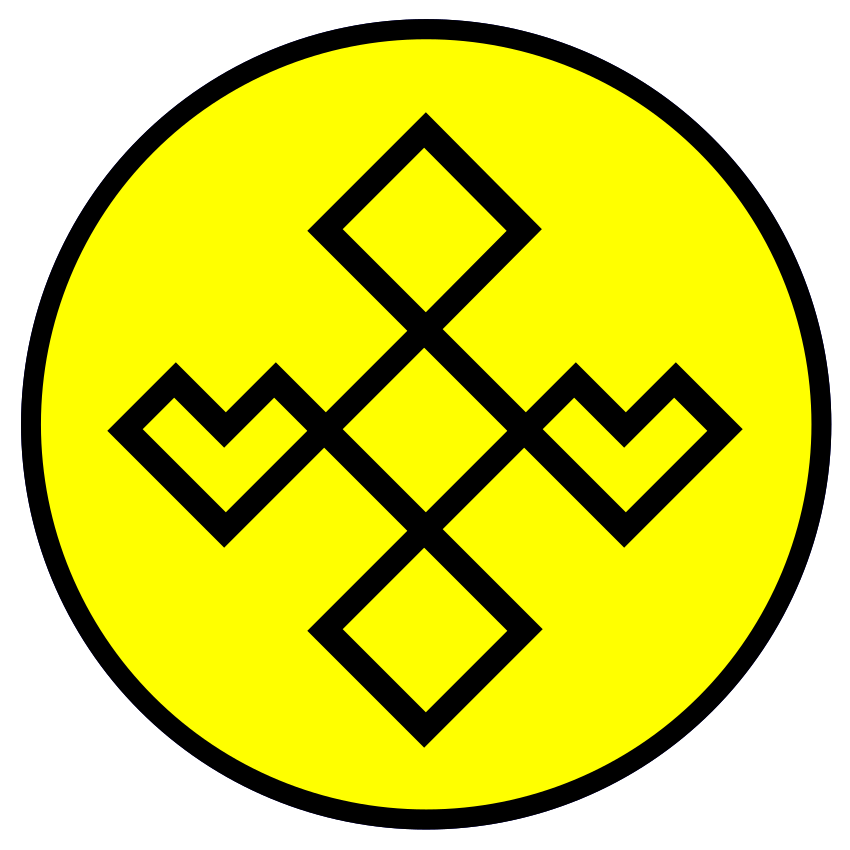
To represent the Flemings we adopt a grouping of associated signs most often seen on the brick walls of traditional Flemish houses (although found also in neighboring regions): the interlace or cross of five lozenges, the two hearts. Whatever their origins (see on this subject the site www.westhoekpedia.org), this coherent group expresses the importance of the community. One may also note that the image of the heart appears on the official emblem of the former French administrative region known as ‘Nord–Pas-de-Calais’ (which roughly comprised the southern portion of the former ‘Seventeen Provinces’).
Another emblem constructed from historical symbolism would be a bundle of six black arrows with red points on a field of gold, symbolizing Southern Flanders, West Flanders, East Flanders, Antwerp, Flemish Brabant, and Limburg.
Location
-
Handzame, Kortemark, Diksmuide, West Flanders, 8610, Belgium


Add a comment