

Presentation
In the linguistic sense, the Dutch comprise the Germanic speakers of the "Low Countries", both of the Kingdom of the Netherlands (Nederland) and of the Belgian and French states.
The territory of the Netherlands was populated by the Batavians and the Frisians, the latter still represented in the provinces of Friesland and Groningen. The Franks and the Saxons gave it its principal language, which belongs to the area of Continental Germanic.
The blue, white, and orange flag was established as early as 1579. Flown by sailors during the national uprising, this "princely banner" bore the colors of the House of Orange, that of the Stadtholder William, hence the war cry Oranje boven! "Orange to the fore !" The shift from orange to red became widespread around 1630, encouraged by political dissensions over the institutions. The orange–white–blue was locally restored upon the return of independence in 1813. The red–white–blue was made official in 1816 and maintained since, although the removal of the color orange (which survives in the form of an orange pennon) somewhat weakens the character of the flag.
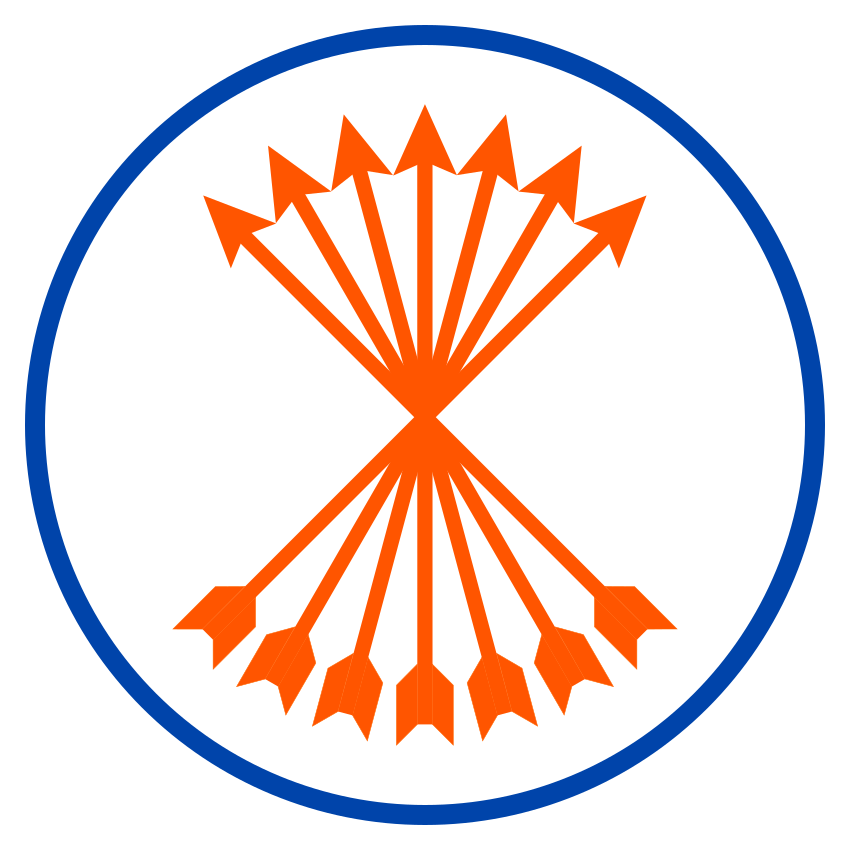
The heraldic arrows representing the seven provinces, an emblem or ‘device’ adopted by the States General in 1578, provide a linear graphic sign. They symbolize concord and union (Plutarch, Moralia, “On Talkativeness,” XVII, recounts the tale of the sons of the Scythian king Scilurus who cannot break the arrows of a single bundle, proof of their harmony. This legend served as the scholarly justification for employing the obvious image of the bundle of arrows, for example in Paradin’s Heroica Symbola, published in Antwerp in 1563). Note: A bundle of seventeen arrows represented the hope of reuniting all the provinces of the former Low Countries (G. de Tervarent, Attributs et symboles dans l’art profane: Dictionnaire d’un langage perdu, 1450–1600, Droz, Geneva, 1997).
Location
-
Zeewolde, Flevoland, Netherlands




Add a comment