

Présentation
The most numerous people of Eastern Romania is that of the Romanians. In 106 AD, Emperor Trajan defeated the confederation of the Dacians and the Getae and founded the colony of Dacia, from which the use of Latin developed. The gradual unification of the two great principalities of Wallachia (13th c.) and Moldavia (the state of the Bassarabs, 14th c.) is at the origin of modern Romania. The Banat and Transylvania also have Hungarian and German populations. A part of Moldavia — or Bessarabia, on the right bank of the Prut — establishes Romanian continuity up to Tiraspol.
The flag takes up the heraldic colors of Wallachia and Moldavia. A first version had been administratively recognized in 1834. At independence, the version with three vertical stripes prevailed. These colors also apply to the Moldavians of the Republic of Moldova.
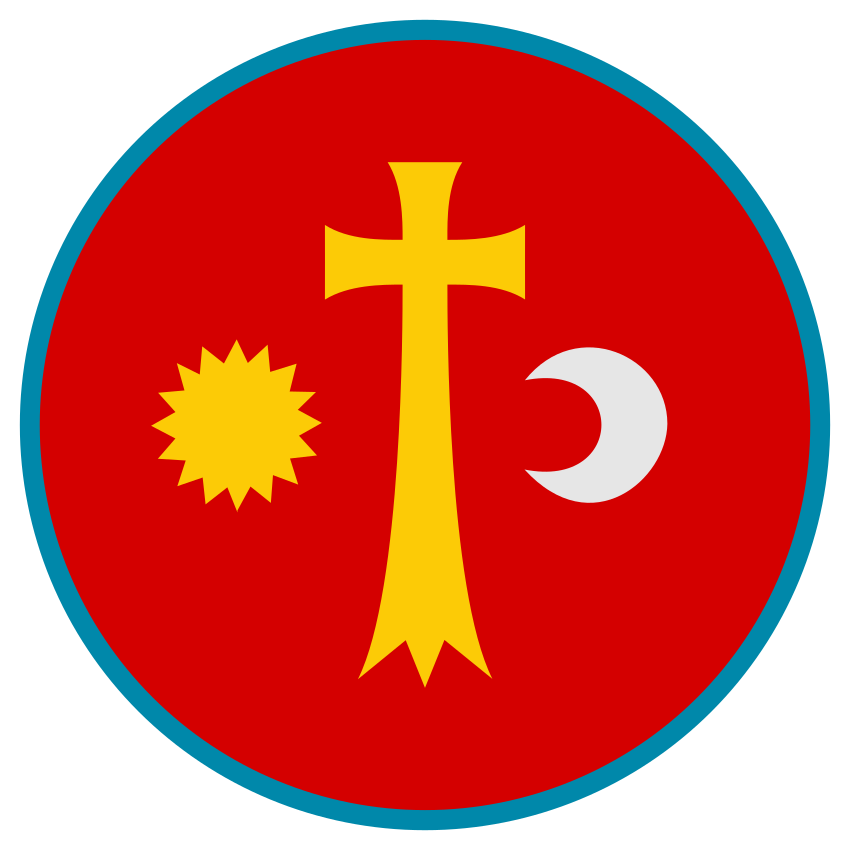
The coat of arms of Romania is usually set on the breast of an eagle holding in its beak a Latin cross with a trifurcated foot, which recalls the linguistic origins of the Romanians. The sun and the moon appear on many regional arms. A simple and legible symbol uses this cross flanked by the two celestial bodies, the sun on the left.
Location
-
Rușețu, Buzău, Romania














Add a comment