

Présentation
A people coming from the North (Chrobatia of Poland, the land of the “White Croats”), the Croats inhabit Slavonia, Croatia proper, Istria, and Dalmatia (the latter the final refuge of the earliest Slavic script, Glagolitic), part of Bosnia and Herzegovina, and a few communities on the fringes of the Banat (the Krašovani). Oriented toward Rome, neighboring Venice—suzerain of Dalmatia—and Hungary, which in 1102 reduced Croatia and Slavonia to vassalage, Croatia took part in the Habsburg Empire until its dismemberment, then in the various Yugoslav states, before gaining its independence. Croatian communities are found in the province of Campobasso in Molise and in the Austrian Burgenland (“Wasser Croats”). (Dalmatian, a Romance language, died out in the seventeenth century in Ragusa; Vegliot, from the island of Veglia, in the nineteenth century.)
The Croatian tricolour dates back to the nineteenth century (1848). It is based on the fusion of the dominant heraldic colours: the red and white flag of Croatia and the blue and white flag of Slavonia, with the blue of Dalmatia. In 1868 it was accepted as the “unified flag of the Triune Kingdom of Croatia–Slavonia–Dalmatia.” It was established in its official form and function in 1990, with Croatian independence. It is generally charged with the national shield.
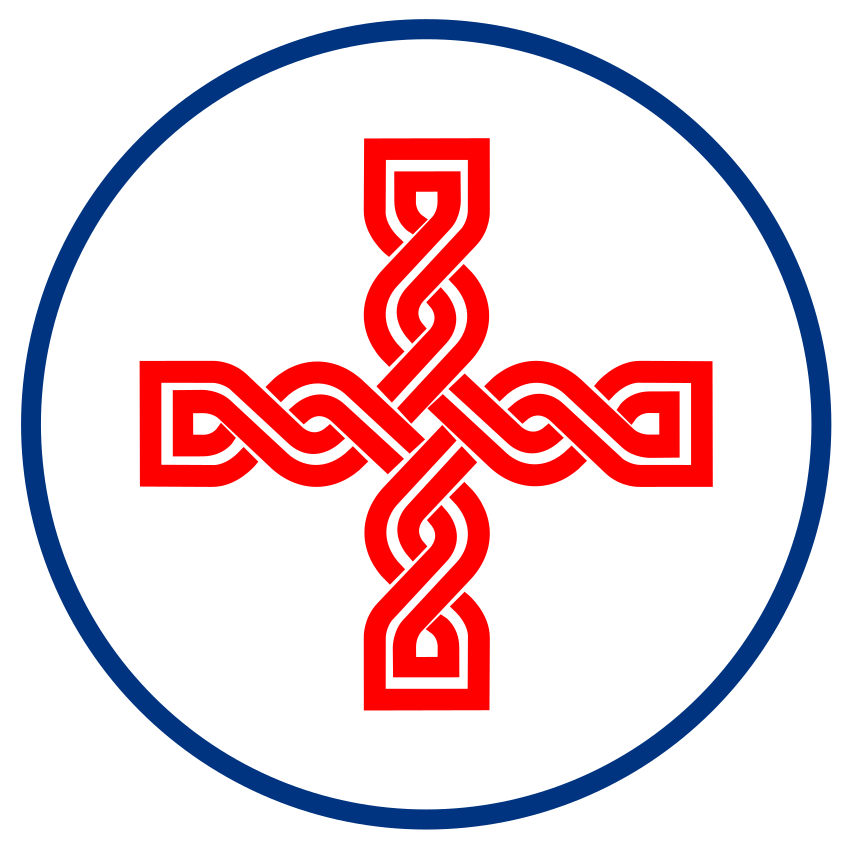
The heraldic emblem of Croatia is the chequerboard (šahovnica). Graphically, the interlacing patterns known as pleter are characteristic of Croatian art from the ninth to the fourteenth century. A very widespread emblem is the interlaced cross, which recalls the design of the cross of Duke Branimir at the end of the ninth century.
Location
-
Donji Kosinj, Općina Perušić, Lika-Senj County, Croatia


Add a comment