
Presentation
The Albanians (a name generalized from one branch of the ethnic group), or Shqiptarë, are thought to have settled their territory, Shqipëri, coming from the east during the early Middle Ages. The land of the ‘people of the Eagle’ experienced Greek, Roman, Byzantine, Norman (11th–12th centuries), Bulgarian, Serbian, and Venetian influences, and long resisted Turkish occupation. The Albanians have had a national state since 1913, as a result of the 19th-century national revival, and they form communities on its margins. ‘The homeland is in those places where I learned the word’ (A. Z. Çajupi, 1866–1930).
Albanian (arbëror, arvanite) is also spoken in some isolated regions of central and southern Greece—Attica, Euboea, Boeotia, Corinthia—where it has been attested since the 14th century. Albanians also settled in Italy, the earliest having been invited by Alfonso I of Aragon and the latest in 1744, and there they preserved their language in certain municipalities of Abruzzo, Campania, Basilicata, Apulia, Calabria, Molise, and Sicily. Others are found in Ukraine, on the Black Sea coast (since the 18th century).
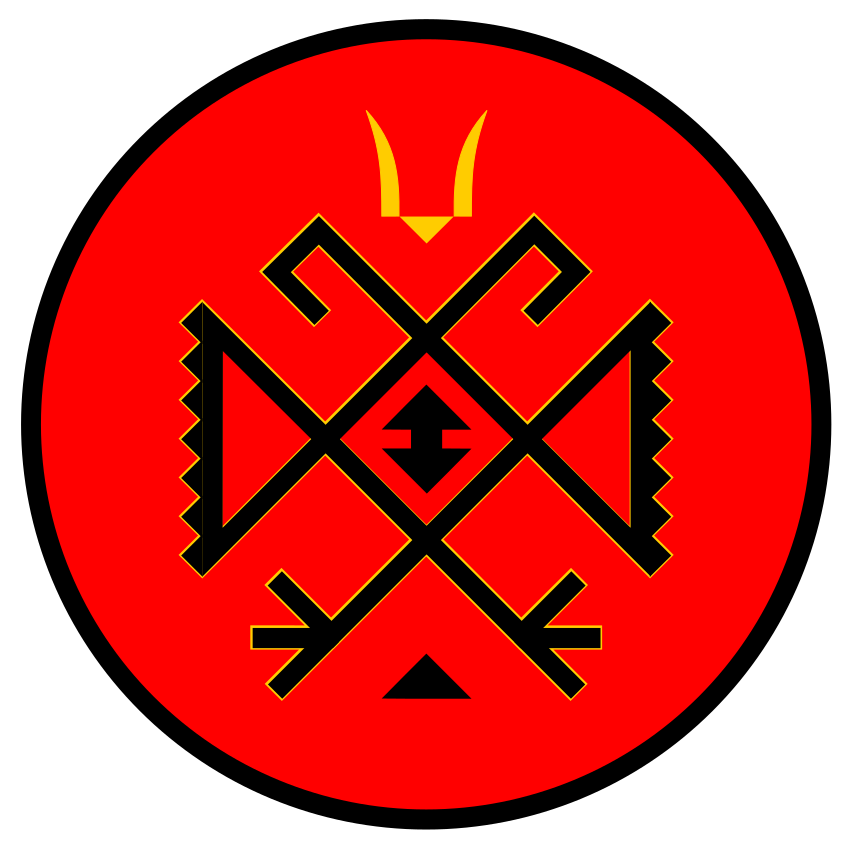
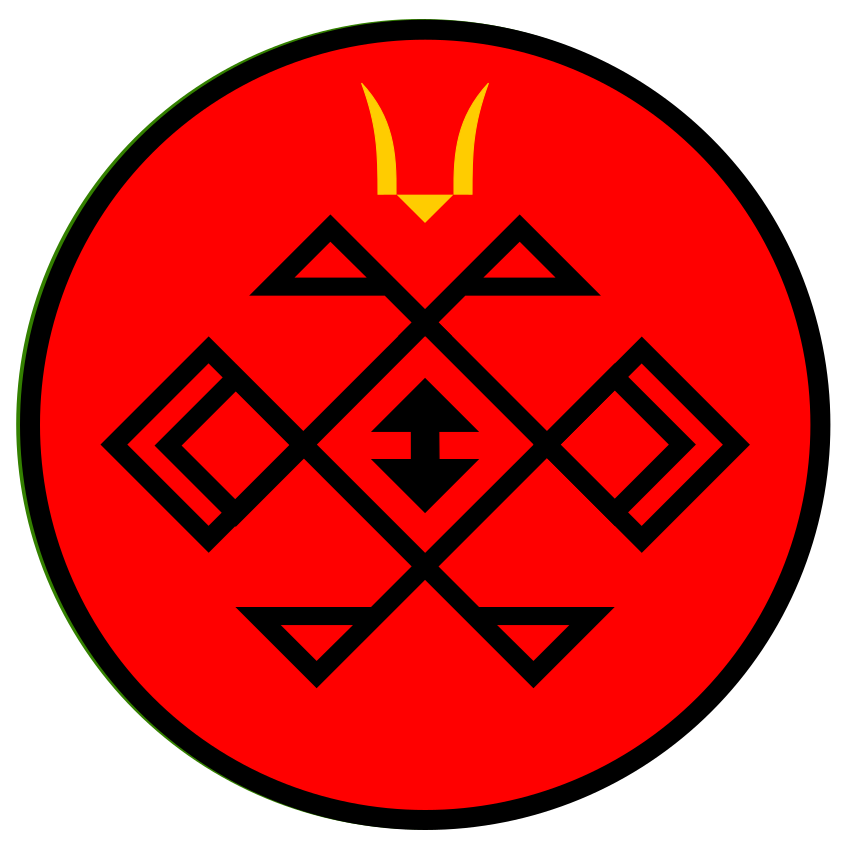
The Albanian flag reproduces, in an invariable design, the eagle from the arms of Gjergj Kastrioti, known as Skanderbeg, hero of independence against the Turks in the 15th century. This eagle may represent a Byzantine renewal of an Illyrian figure. The two heads have been interpreted as the two major Albanian sub-ethnic groups, the Ghegs in the north and the Tosks in the south. The coat of arms bears the ceremonial helmet of Skënderbeu, Skanderbeg (ca. 1460). Preserved at the Kunsthistorisches Museum in Vienna, this metal helmet adorned with gold is surmounted by the head of a wild goat. Legend holds that candles fixed to the goats’ horns frightened the Turkish invaders. The two horns are also seen as a reminiscence of the titulature of Alexander the Great, possessor of the two horns of the divine ram, an image of solar charisma.
The emblem shown here is characteristic of Albanian folk arts. It is the solar schematization of the broad-winged double-headed eagle which, in folktale, lies at the origin of the ethnonym and of national qualities (A. Dozon, Contes albanais, Paris, 1881; A. Doja, Naître et grandir chez les Albanais. La construction culturelle de la personne, Paris, 2000, p. 147 ff.). To it we add the horns of the helmet.
Location
-
Tirana County, Central Albania, Albania