
Presentation
Bulgaria, the source of Europe’s first gold (Varna in the 5th millennium BCE), has behind it a long ethnic history. The ancient land of the Thracians, for a time a Roman province, welcomed Slavic tribes around the 6th century CE. A Ugric people, linguistically Turkicized, originating from the region between the Volga and the Kama (known until the 13th century as “Black Bulgaria”), which entered the lower Balkans in the 7th century, gave its name to the country and to the Slavs who had settled there. In 678, the leader Asparuh crossed the Danube. After the epic of the Bulgarian and Wallachian empires from the 10th to the 13th century, Tarnovo was ruined by the Turks in 1392. In the face of Ottoman administration, Bulgarian national feeling survived in popular memory, until it took concrete form in a modern state in 1908.
Other Bulgarians, settlers established by the Tsars in the 17th century, are found along the Tauride coast.
The Bulgarian flag adopted in 1878 follows the three-band model of the Slavic peoples, with the national green.
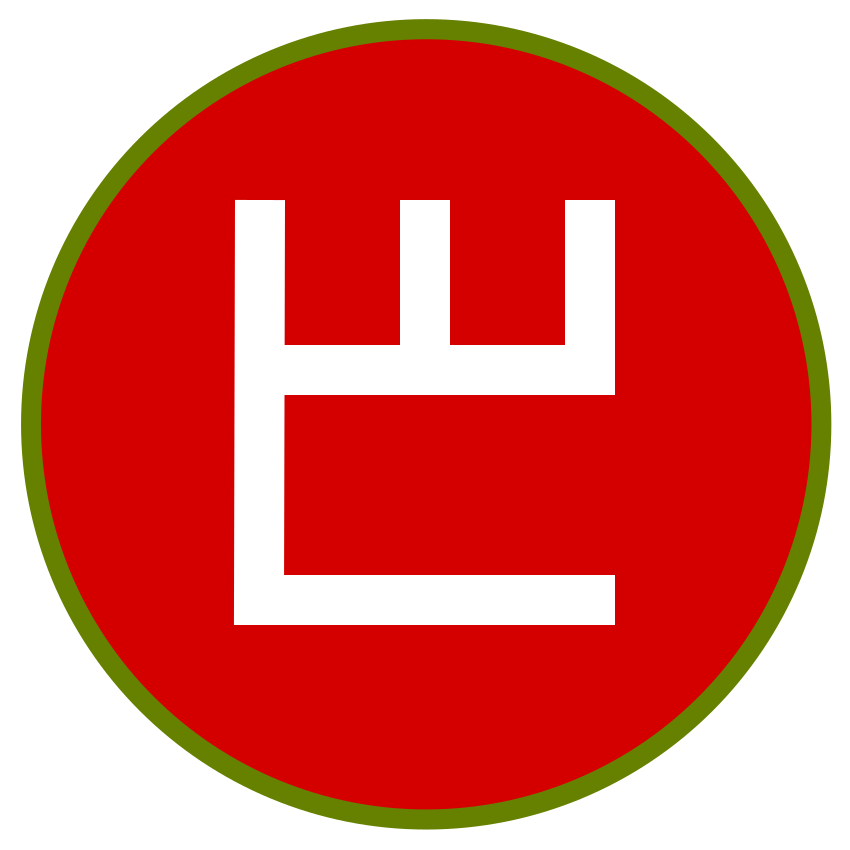
For the establishment of a Bulgarian logograph, the Glagolitic character B is far more distinctive than the crowned lion of the coat of arms. Its use is particularly appropriate in Bulgaria, since Boris of Bulgaria welcomed this script into his kingdom as early as 865. Analogy: the Bulgarian ensign according to the portolan of Guillem Soler (ca. 1380) shows a figure with three rays (Ш).
Location
-
Enina, Kazanlak, Stara Zagora, 6142, Bulgaria