
Presentation
Roman people of the Mediterranean part of the Iberian Peninsula, divided among several regions of the Kingdom of Spain with differing statuses (the Communities of Catalonia, Valencia or the Valencian Country, the Balearic Islands, and as far as Murcia), a “département” of the French state (Roussillon, Cerdagne, Capcir—regions annexed in the 17th century), and Alghero in Sardinia (since 1353). The Catalan language is also official in Andorra, thanks to the Privilegis de les valls pirenenques.
Note: The Val d’Aran is Gascon-speaking.
The Catalan flag takes up the four pales of the County of Barcelona, attested since the 12th century and found as well on the arms of Roussillon, Andorra, the Balearic Islands, and the Valencian Country, with distinctive azure marks for the latter three.
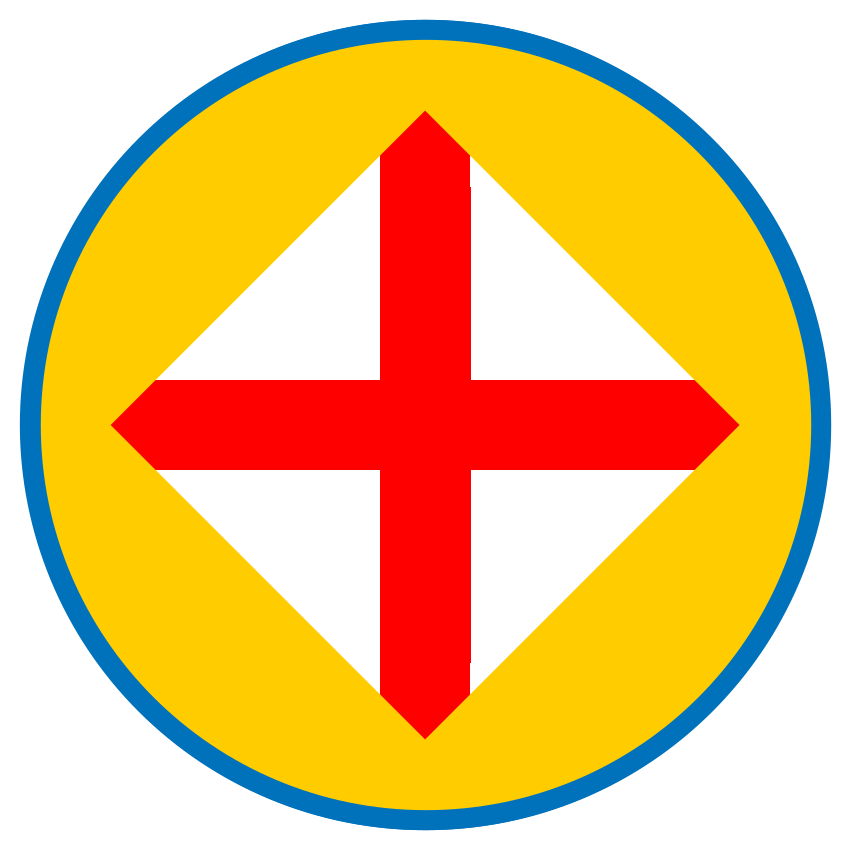
The lozenge-shaped shield is typically Catalan (as in the municipal arms of Prades; the coins of Barcelona and Perpignan; see the Poey d’Avant catalogue, PA 3611, etc.). In particular, it is often shown bearing the cross of Saint George on numerous coats of arms. The cross also recalls the one erected by Catalans from all regions on the sacred mountain of Canigó, where the midsummer Saint John’s solstitial fire is lit. The cross upon the lozenge represents the Creu de Sant Jordi, a distinction created in 1981 by the Generalitat to honor services rendered to Catalan identity and civic life.
The image of the cross and its variants are predominant throughout the Catalan lands among the engraved signs of dolmenic rock art (Roc de Nous Creus at Céret, Roc de l’Amoriador, Glorianes, Roussillon). Like the decorative motifs of folk art, the many Roques de les Creus in the Catalan mountains have perpetuated the protective power of the cross.
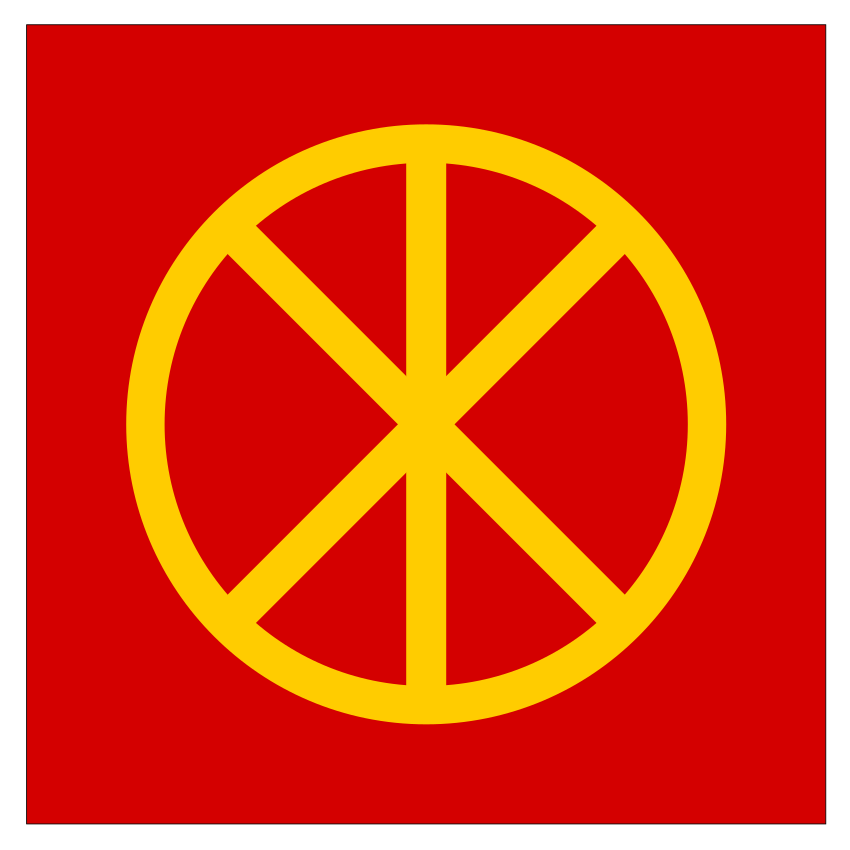
Hence the emblem shown here.
Location
-
Pontils, Conca de Barberà, Tarragona, Catalonia, 43421, Spain